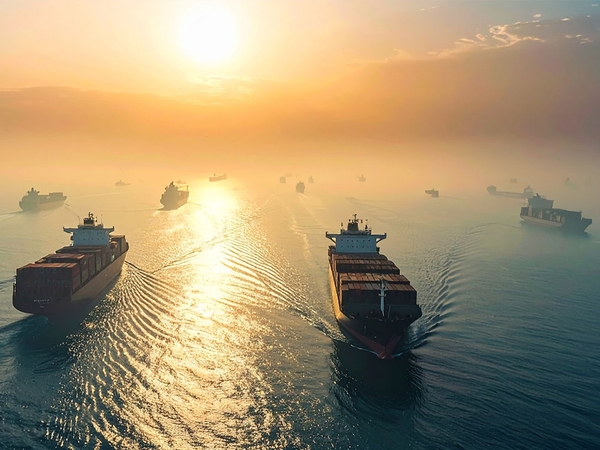
700 vessels, thanks to you
What do the world’s first ammonia bunkering vessel and luxury yachts have in common? They are all part of BSM’s growth story and it goes well beyond 700 managed vessels.
By Fabian Reimers, BSM Group Commercial Director
What counts in ship management today?
Published on 09 Nov 2026
Tensions around the Strait of Hormuz continue to expose the vulnerability of one of the most important energy corridors. Security concerns in the Red Sea have diverted vessels around the Cape of Good Hope, while the war in Ukraine continues to affect commercial shipping in the Black Sea.
What many initially regarded as temporary disruptions are becoming part of our industry's operating reality and a constant factor for ship managers. But accepting this new reality cannot mean accepting deliberate attacks on civilian seafarers. Such attacks have no place in an industry that relies on the safe passage of civilian vessels and crews.
At the same time, shipping companies must navigate FuelEU Maritime, the EU and UK Emissions Trading Systems and existing IMO frameworks such as the Carbon Intensity Indicator – while still awaiting clarity on the adoption of the IMO Net-Zero Framework and how regional and global regulations may ultimately fit together. Carbon performance now has a direct impact on operational decisions and costs.
The challenge is made even more complex as the industry is expected to reduce emissions, while geopolitics continue to force many vessels onto longer and less efficient routes but commercial pressures demand efficient and competitive operations.
What counts is people. Safe operations are ultimately delivered by seafarers and their shore colleagues, making countless decisions every day. As the operating environment becomes more complex, having enough qualified people with the right skills becomes even more important.
Technology is, of course, increasingly essential in supporting our people to manage this complexity. Artificial intelligence and digital tools can help crews and shore teams handle fleet performance, reporting and compliance more efficiently, freeing up time to focus on the tasks that require their expertise and judgement. But technology cannot replace seafarers. The final call remains with people.
This is why ship management remains fundamentally a people business, especially when circumstances are difficult. Our work is built on trusted relationships with shipowners and our people, particularly the seafarers who take care of our clients' assets and the families who support them. These relationships are not built during times of crisis; they are tested by them. And there is little doubt that they are being tested today.
As ship managers, we can call for an end to attacks on civilian seafarers and maintain close dialogue with governments and industry bodies. But we cannot control geopolitical crises or the course of regulatory negotiations.
What we can control, however, is how closely we engage with our clients and how we support and stay close to our people. We must continue to prove that the trust placed in us is well deserved. Amid geopolitical and commercial pressures, that is our responsibility. That is what counts.
Sincerely,
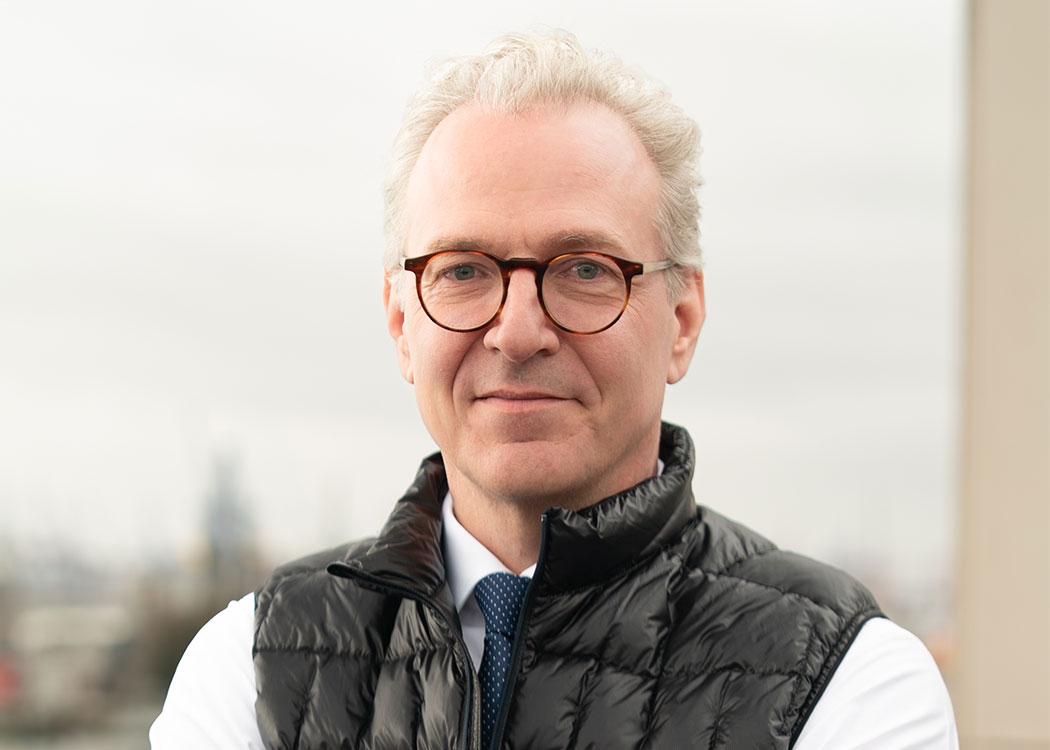
Sebastian Hardenberg
Chief Executive Officer
Bernhard Schulte Shipmanagement
What do the world’s first ammonia bunkering vessel and luxury yachts have in common? They are all part of BSM’s growth story and it goes well beyond 700 managed vessels.
By Fabian Reimers, BSM Group Commercial Director

09 Nov 2026 - BSM Highlights
BSM’s Chief Digital Officer Sankar Ragavan on AI, human judgement and why the industry's biggest challenge is learning to work with technology rather than simply adopting it.
09 Nov 2026 - BSM Highlights
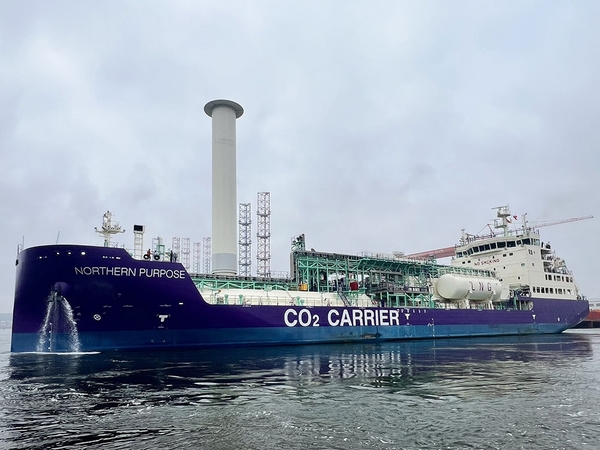
After several years of planning, construction and preparation, BSM’s first managed LCO₂ carrier, “Northern Purpose”, has entered service. Having successfully completed her first cargo operations, the pioneering vessel is now connecting European industrial emitters with permanent CO₂ storage in Norway.
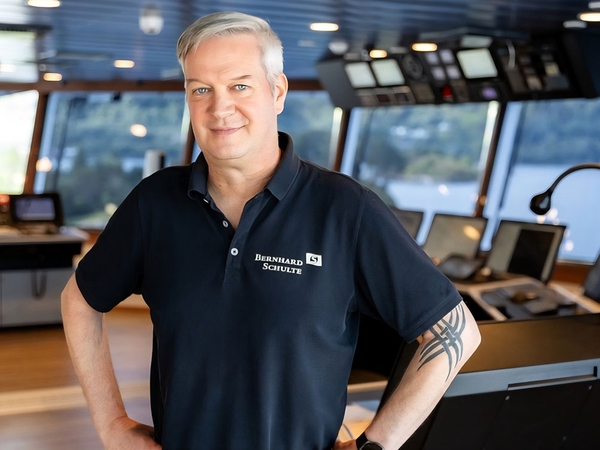
From shipyard to offshore operations: Over the past few months, BSM has taken over the management of four new-build Commissioning Service Operation Vessels (CSOVs) of the latest generation. One of those who played a key role in bringing all four sister vessels into service, is Captain Rainer Müller.
09 Nov 2026 - BSM Highlights
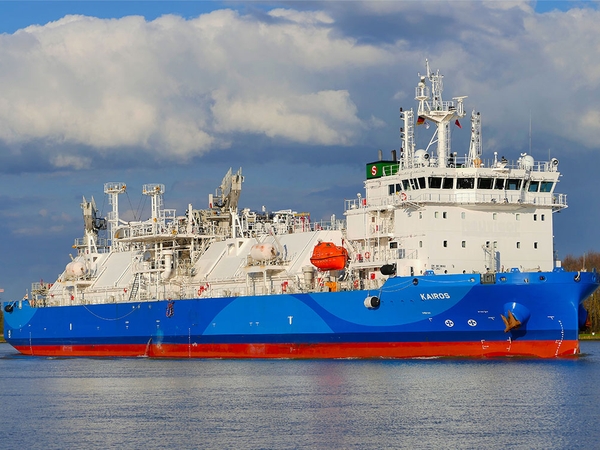
As demand for LNG bunkering vessels grows, the industry faces a less visible challenge: finding and training the seafarers who can operate these highly specialised vessels safely and efficiently. A new case study developed jointly with SEA-LNG, a multi-sector industry coalition that promotes the use of liquefied natural gas as a marine fuel, explores BSM’s lessons learned from nearly a decade of LNG bunkering operations.
09 Nov 2026 - BSM Highlights
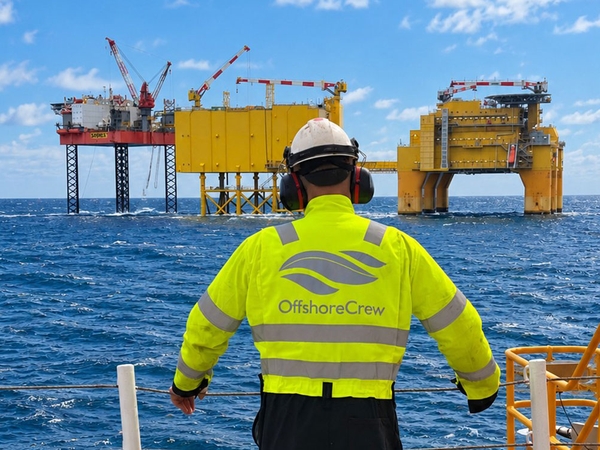
Bernhard Schulte Shipmanagement (BSM) has agreed to acquire a 50% stake in OffshoreCrew AS, a Norwegian specialist in offshore recruitment and crewing solutions. The investment further strengthens BSM’s service offering for customers in the offshore and maritime sectors.