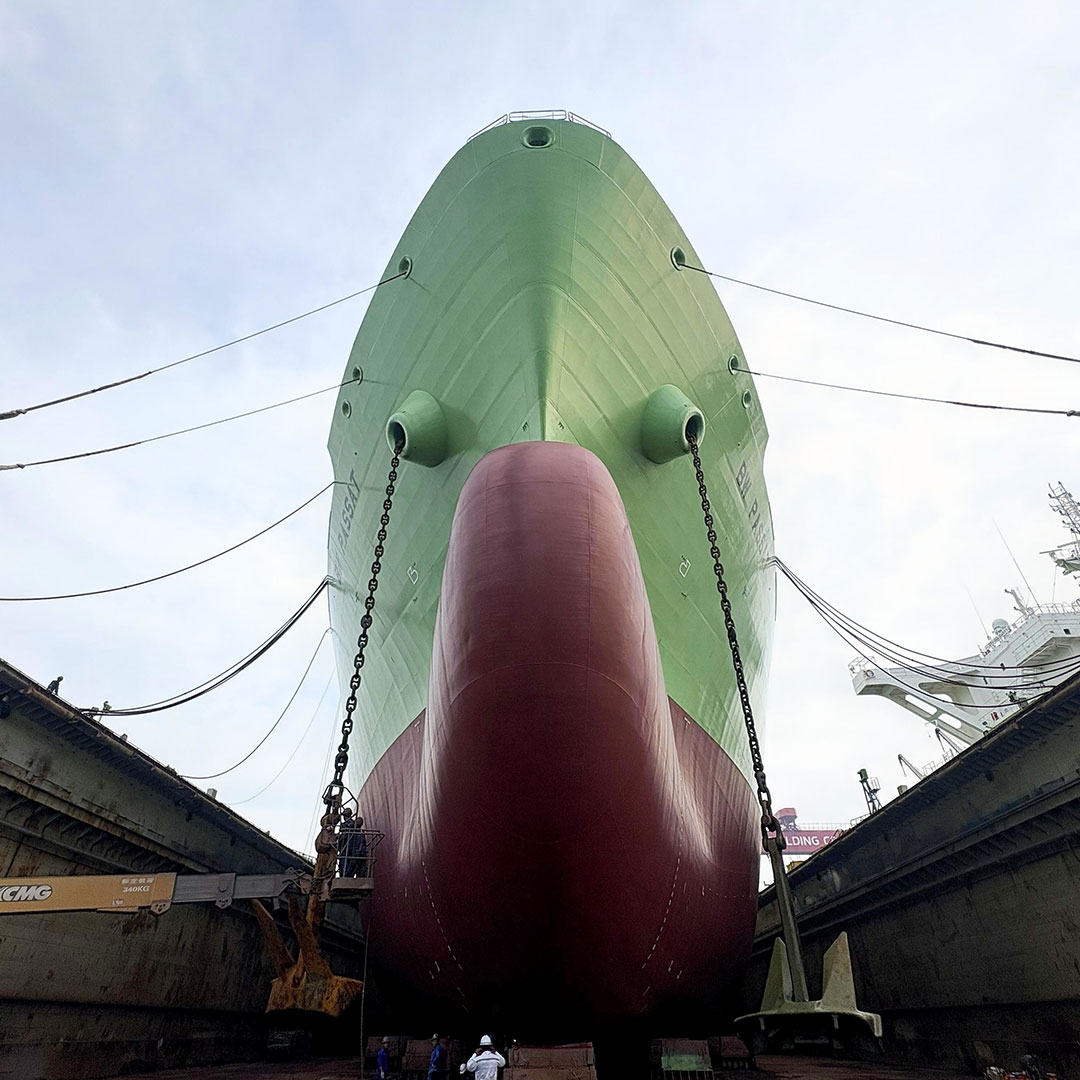
Dry docking requirements vary significantly depending on a vessel’s type, age and general condition. Alongside steel renewal, hull coatings and machinery overhauls, today’s dockings often extend to structural repairs linked to vessel age, ballast water treatment system installations or upgrades, emissions-related modifications, life-extension measures or class-driven enhancements. In addition, shipyards operate under fluctuating labour availability and elevated material costs directly influencing pricing, schedules and delivery certainty.

The importance of preparation and high‑quality repair specifications

In this environment, the success of a dry docking is determined long before a vessel enters the yard.

At the core of every successful docking lies a well-structured repair specification. It forms the contractual basis on which shipyards price, allocate resources and execute work. Any ambiguity or omission at this stage can result in variation orders, commercial claims or changes in the schedule once the vessel is already committed to the yard.

With their detailed knowledge of each vessel, trading pattern and client expectations, BSM’s fleet teams play the central role. They remain fully accountable for delivery, vessel performance and client communication. They plan and oversee the docking alongside the management of their day-to-day fleet operations.

Specialist support where it adds value

At the same time, dry dockings are infrequent but disproportionately impactful events. They require a different depth of technical and commercial focus. And so, in particular, for long or complex dockings, fleet teams can bring in a specialist from BSM’s Central Dry Docking Team for support.

“The objective of bringing in a specialist is not to dilute fleet ownership or accountability or to increase the scope unnecessarily, but to ensure that known requirements are captured upfront, when they can be planned, scheduled and priced transparently”, underlines Ramkrishnan Vellur, Group Manager, Central Maintenance Support. “It is always the fleet teams who are responsible for vessel performance and client relationships.”

The advantages of close collaboration

As the Central Dry Docking Team regularly supports projects of all vessel types across different regions, it brings broad experience and understanding of shipyard practices and market benchmarks. “Over the last couple of years, we have been directly involved with projects covering LPG carriers, tankers, bulk carriers, container vessels, cruise and offshore vessels. Our team has the experience to support all vessel types under BSM management”, says Vellur.

The team can anticipate how specifications will be interpreted by yards, where assumptions may be made and how pricing structures are built. It can therefore provide targeted reinforcement during key phases of the dry dock: when it comes to planning, specification finalisation, class and regulatory interpretation, yard selection and negotiations.

The specialists can also identify latent repair risks, close potential contractual gaps and ensure that the scope of work accurately reflects the vessel’s condition and regulatory obligations. Hari Krishna from the Central Dry Docking Team explains: “We do a lot of risk mitigation, and we will also ensure that the final invoice from the yard is reasonable and corresponds to the work carried out. Just recently, we supported one of our fleet teams and managed to reduce the final cost by 5-6% in a Chinese shipyard.”

“Being able to build on the expertise of colleagues who do this several times a year is a great advantage. It can considerably enhance the negotiating position of our fleet teams and make dry dockings more efficient for our clients”, says Thorge Linne, Fleet Director, BSM Germany, who brings in a specialist whenever it makes sense. “The secret to success always lies in thorough upfront planning and full transparency with our clients”, he concludes.

Ramkrishnan Vellur

Group Manager, Central Maintenance Support

Contact
DO YOU HAVE QUESTIONS?

Please contact the expert.

RELATED BSM Highlights

From conflict to clean: decarbonisation under pressure

While global attention is fixed on the conflict in the Middle East, supply chain disruption and broader geopolitical volatility, shipping’s long-term decarbonisation challenge has not faded into the background. If anything, the current environment is reinforcing its urgency. At BSM, the view is clear: the agenda itself has not changed, but the forces shaping it are becoming more immediate and tangible.

Smart connectivity: powering ship performance at sea

High‑speed, reliable internet connectivity onboard is sometimes still perceived as a “nice to have”. In reality, this view significantly underestimates its impact. In an increasingly digital maritime industry, connectivity has become a core operational asset. For shipowners, it directly underpins safe operations, efficiency, transparency, and long‑term competitiveness.

Mentoring for performance: how BSM’s Cadet Programme delivers long-term value for owners

As the maritime industry navigates rapid technological change, rising regulatory expectations and an increasingly complex operating environment, one thing is clear: safe and efficient operations depend on well‑trained, confident and motivated seafarers. At BSM, this belief is shaping the advancement of its Cadet Programme, with a strong emphasis on support, guidance and mentoring.

Expanding into the extremes: BSM Cruise Services and expedition ship management

While demand for expedition cruising continues to grow, operating vessels in some of the world’s most remote and environmentally sensitive regions is becoming increasingly complex. Shipowners in this segment require far more than traditional cruise ship management; they need partners with proven experience in polar operations, advanced logistics, adherence to the strictest regulations and specialised crew preparedness.