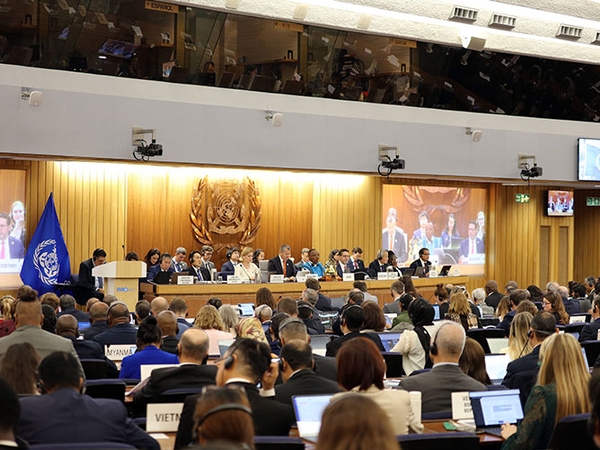
Despite the many uncertainties following the failure to agree on the IMO net-zero framework, the goal remains the same – shipping aims to become climate-neutral by 2050. The use of alternative fuels and new propulsion systems will be of major importance. The number of new building orders with dual-fuel propulsion or at least with the retrofitting option has significantly increased, as the market prospects for ships with conventional fuel propulsion are likely to deteriorate in the future.

This development is also reflected in the fleet managed by BSM. The number of vessels with LNG dual-fuel engines is steadily increasing. In addition, BSM took over management of the first ships with methanol dual-fuel propulsion in 2025. Ammonia as fuel is slightly behind in adoption. Nevertheless, we want to take a closer look at this alternative in this article.

Ammonia gains momentum in newbuild orders

Ammonia is emerging as a significant alternative fuel for the maritime industry, with the sector shifting from research and demonstration to early implementation. As of late 2025, no large seagoing ship is yet operational on ammonia, but there has been a notable increase in newbuild orders and “ammonia-ready” vessels. There are currently around 40 ammonia-capable newbuild vessels with dual-fuel engines on order worldwide. Most are scheduled for delivery from 2026 onwards, aligning with the regulatory and infrastructure readiness anticipated by ports and engine manufacturers. In addition, numerous “ammonia-ready” vessels—ships built to allow for future retrofit to ammonia propulsion—are either operational or planned.

The IMO approved interim safety guidelines for ammonia as a marine fuel in December 2024. These guidelines address toxic risks, minimize releases, and provide advice on safety systems and operational protocols, marking a critical step forward in facilitating deployment at scale. Ports such as Rotterdam and Singapore are advancing bunkering infrastructure and completed ammonia bunkering trials, further paving the way for practical adoption.

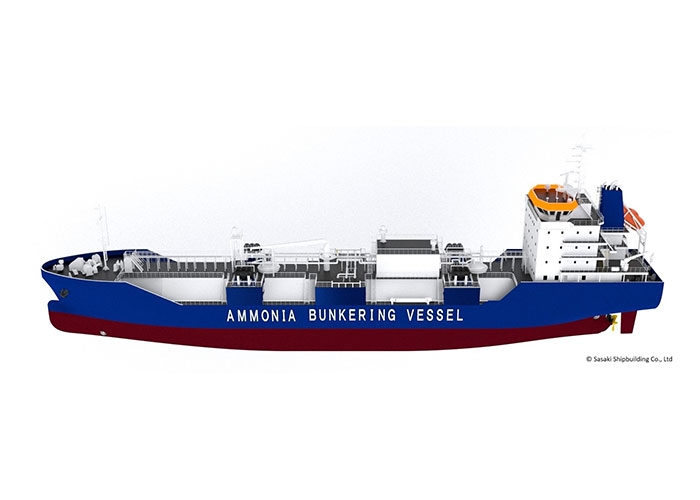
BSM is among the pioneers and will manage the world’s first ammonia bunker vessel, scheduled for delivery in 2027 (see the information box for details). BSM has considerable experience in both carrying ammonia as a cargo and in cryogenic bunkering.

Bringing together ammonia expertise

In order to share its knowledge and promote exchange within the industry, BSM Germany has arranged an “Ammonia Day” this year and brought together industry experts and ship operators to explore ammonia’s potential as a carbon-free shipping fuel. Furthermore, BSM stablished an internal Ammonia Working Group to advance the capabilities in ammonia as a maritime fuel. Through these efforts, BSM aims to support its customers’ sustainability objectives as well as industry progress.

The working group addresses all aspects of ammonia fuel management, including storage, transfer, consumption, mitigation of vapor release and the unique toxicity risks ammonia poses. The group also reviews relevant regulations, explores risk-based safety strategies and identifies actionable steps towards safe implementation.

Training and operational readiness

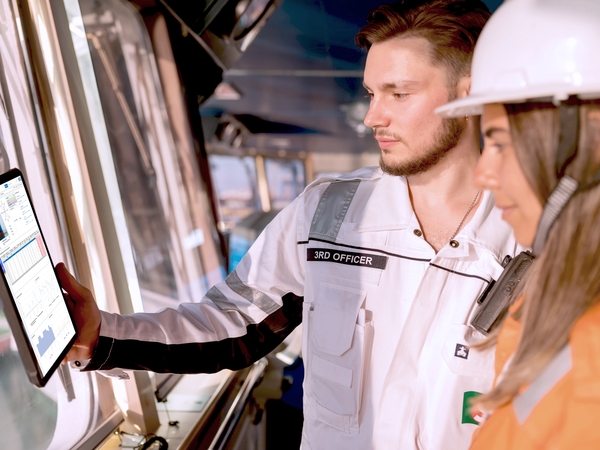
BSM has developed a training framework for methanol and ammonia that complies with IMO guidelines STCW.7/Circ.25 and other industry standards. A compliance matrix has been prepared to align expectations to meet IMO and flag requirements of future. With regard to crew training, we have ensured that our ammonia training encompasses requirements set out by industry standards ensuring crew is upskilled on new competencies required to manage operations and emergency response safely, for example tactical firefighting and the safe handling of ammonia leaks and releases.

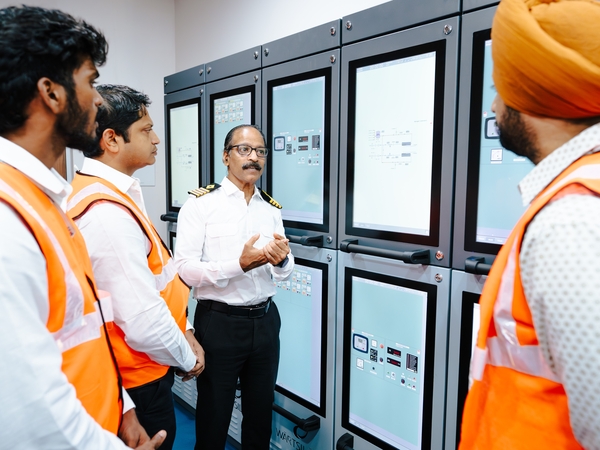
In the summer of this year, BSM launched its first methanol bunkering simulator at its Maritime Training Centre (MTC) in Kochi, India, with an ammonia bunkering simulation module to follow in 2026. Additional bunkering simulators in other MTC locations of BSM will follow soon. This rounds out comprehensive simulation coverage through the already existing LNG hub training as well as methanol and ammonia - the three primary alternative fuels driving maritime decarbonisation.`

One thing has always been clear to BSM: as ship managers, we must be ready for a multi-fuel future. No matter which propulsion technology and fuel our customers choose, we will be fully prepared.

BSM to manage world's first ammonia bunkering vessel

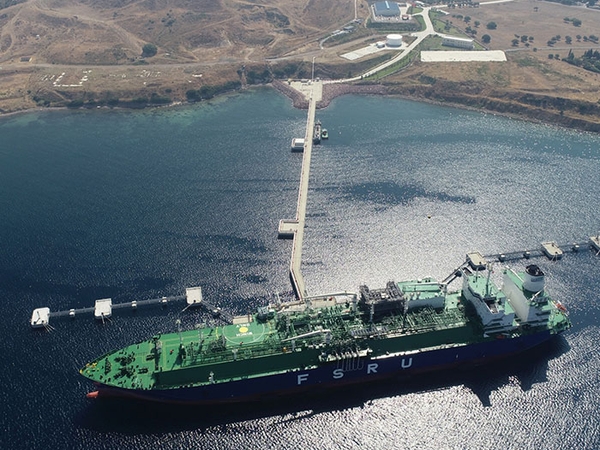
In June of this year, Japanese trading company ITOCHU Corporation signed a contract for the construction of the world's first ammonia bunkering vessel. Bernhard Schulte Shipmanagement (BSM) is pleased to announce that it will be providing technical management for this innovative newbuilding. The ship with a capacity of 5,000 cbm is scheduled for delivery in 2027 and will serve the Singapore bunkering hub.

“This is a significant milestone in our ongoing collaboration with ITOCHU,” says Nick Topham, Managing Director of BSM Germany. “Since 2022, BSM Germany has actively participated in ITOCHU working groups to support the development of a global ammonia supply chain infrastructure. We have contributed extensive experience in both carrying ammonia as a cargo and in cryogenic bunkering.”

Alternative fuels such as ammonia play a crucial role in maritime decarbonisation efforts. Tank-to-wake emissions from ammonia-fuelled vessels can reduce CO2-equivalent emissions by up to 90% compared to gas oil engines.

BSM began developing relevant knowledge and skills at an early stage to prepare for managing the first ammonia bunkering vessel, as well as future ammonia-fuelled ships. Operational procedures are well under way to ensure staff are well versed in ammonia-related challenges. Ammonia training courses are already conducted at BSM’s Maritime Training Centres to provide fundamental knowledge and raise awareness of new fuels and technologies. In this context, an ammonia bunkering simulator will be introduced at the MTC in Kochi in Q2 2026, further preparing seafarers for a low-carbon future.

Moritz Fritsche

Group Business Development

Contact
DO YOU HAVE QUESTIONS?

Please contact our expert.

RELATED BSM Highlights

Lost in signal: The challenge of GNSS disruptions

Satellite navigation has become an integral part of everyday life, supporting everything from mobile mapping to secure banking. While these systems are generally dependable, incidents of signal interference and manipulation are on the rise. If a misplaced navigation dot is an annoyance on land, the same failure at sea can quickly become a frontline operational challenge, testing not only the resilience of a ship’s systems, but also the capabilities of its crew.

Empowering seafarers for a multi-fuel future

As the maritime industry navigates its course toward lower emissions, a range of alternative fuels is reshaping how ships are powered. But the shift to new fuels is more than a technical change — it is a human one. Ensuring that seafarers are properly trained to handle, operate, and manage alternatively powered vessels is key to securing a smooth transition to the fuels of the future. Bernhard Schulte Shipmanagement prepares its crew to power tomorrow’s ships through comprehensive training programmes.

Is seafaring still attractive?

Since the steam engine era, society has progressed through the technological and digital revolutions. Today, Industry 4.0 offers near-limitless access to knowledge and a vast network of connected devices. Products or services seem only one click away. But as long as sci-fi ‘beaming’ technology remains fiction, maritime transport will continue to carry most goods, keeping seafarers at the heart of global trade. But is seafaring still attractive?